The Bread Alphabet Font: A Whimsical Typeface for Playful Branding
There’s something universally comforting about bread. The soft texture of a fresh loaf, the golden crust of a perfectly baked baguette, the satisfying crunch of toasted sourdough—it’s a sensory experience that evokes warmth, home, and nourishment. Now, imagine translating that tactile, flavorful charm into typography. The Bread Alphabet Font does exactly that, offering a creative and unexpected twist on letterforms that feels both playful and surprisingly versatile. This isn’t just another novelty typeface; it’s a thoughtfully crafted design asset that blends visual whimsy with practical application, perfect for anyone looking to infuse their projects with personality and charm.
More Than Just Letters: A Feast for the Eyes
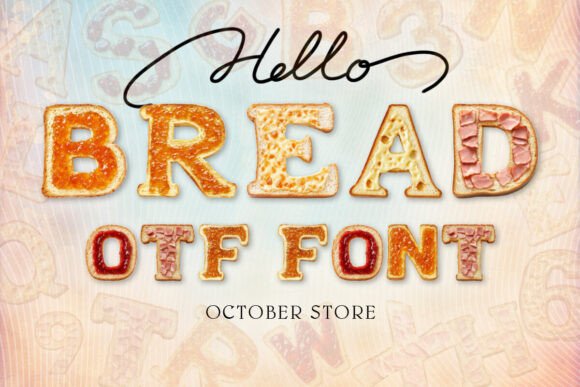
What immediately sets the Bread Alphabet Font apart is its construction. Each of the 36 characters—comprising the full A-Z alphabet and digits 0 through 9—is meticulously designed to resemble different elements of a delicious sandwich or breakfast spread. You’ll find letters shaped from the pillowy softness of white bread, accented with the vibrant red of strawberry jam, the zesty orange hue of marmalade, and the savory textures of melted cheese and sliced ham. This color font, delivered in the modern OpenType-SVG format, captures the nuanced textures and gradients of these food items in a way that traditional flat fonts cannot. It’s a premium font that feels handmade, offering a level of detail and warmth that can instantly elevate a design from ordinary to memorable.
Where Flavor Meets Function: Practical Applications
While the font’s aesthetic is undeniably fun, its true value lies in its application. For small business owners, especially those in the food, bakery, café, or artisanal goods space, this typeface is a branding goldmine. Imagine using it for your logo design—the word “Bakery” rendered in this font instantly communicates your product’s essence without a single line of explanatory copy. It’s perfect for packaging design on jam jars, cookie bags, or granola boxes, creating a cohesive and appetizing visual identity that stands out on the shelf.
Content creators and marketers will find it a powerful tool for engagement. Social media graphics for a weekend brunch promotion, a recipe blog header, or a food-themed Instagram story gain an irresistible, tactile quality. The font’s playful nature makes it ideal for invitations to a kitchen tea party or a casual gathering, setting the tone for a fun, relaxed event. In editorial layouts for food magazines or digital cookbooks, it can be used for pull quotes or chapter titles, adding a layer of visual interest that complements the photography. Even for non-food-related projects—think children’s book titles, playful merchandise like tote bags or mugs, or a whimsical website banner for a creative agency—the Bread font injects a dose of approachable creativity that is hard to ignore.
Pairing for Perfection: Making the Font Work for You
The key to using a strong display font like Bread effectively is in the pairing. Because it carries so much visual weight and personality, it should be used strategically, typically for headlines, logos, or accent text, not for long body paragraphs where readability could suffer. Pair it with a clean, simple sans-serif font for body text to create balance and ensure your message remains clear. For example, the warm, organic curves of Bread would contrast beautifully with the geometric precision of a font like Montserrat or Lato, creating a dynamic and professional hierarchy.
Consider the mood you’re trying to set. For a project with a rustic, artisanal feel, pairing it with a subtle, textured serif font could work well. For a more modern, playful vibe, a rounded sans-serif might be the perfect companion. Always test your font pairings in context—view them on a mockup of your website, a draft of your social media post, or a sample of your packaging. Ask yourself: Does the combination feel harmonious? Does it guide the viewer’s eye effectively? Does it reinforce the brand personality I’m trying to build?
Design Considerations and Licensing
Before diving in, a few practical notes are essential. First, because Bread is an OpenType-SVG color font, its compatibility is specific. It works beautifully in modern versions of Adobe Photoshop, Illustrator, Affinity Designer, and other programs that support color fonts. However, as noted, it is not compatible with certain cutting machine software like Cricut, which requires standard vector outlines. Always check the software requirements for your specific workflow.
Second, think about readability in different contexts. While the font is legible at larger sizes, its detailed textures might become muddied if used too small or on a very busy, patterned background. Ensure there is sufficient contrast and space around the text. Finally, review the licensing carefully. Most premium fonts, including this one, come with a commercial license that allows you to use the font in projects for clients and for sale, but it’s crucial to understand the specific terms—whether it covers digital products, merchandise, and large-scale print runs.
In a world saturated with sleek, minimalist typography, the Bread Alphabet Font is a refreshing reminder that design can be joyful, sensory, and deeply human. It’s a creative font that doesn’t just spell words; it tells a story, evokes a feeling, and creates an instant connection with the viewer. For designers, entrepreneurs, and creators seeking to build a memorable brand identity or add a unique signature to their work, it offers a slice of inspiration that’s both delicious and effective.